Jeremias
Jeremias is one of the two assistants assigned to K., the land surveyor, by the castle authorities. He is a former childhood playmate of Frieda and, after being dismissed by K., becomes the instrument of Frieda's departure, ultimately taking her as his own. His role in the novel is to embody the castle's intrusive, ambiguous control over K.'s life and to catalyze the collapse of K.'s relationship with Frieda.
Identity and Introduction
Jeremias first appears in the novel as one of two young men who arrive in the village from the direction of the castle, walking remarkably fast despite the snowy roads. They are of medium height, very lean, with dark brown complexions and very black goatee beards, and they are so alike that K. cannot tell them apart. They are introduced to K. by the bearded man at Lasemann's house, who calls out "Good day, Artur; good day, Jeremias!" as they pass. When K. later finds them waiting for him at the Bridge Inn, they identify themselves as his assistants, claiming to be the old assistants he was expecting. K. is immediately struck by their resemblance and their lack of surveying instruments, and he decides to treat them as a single man, calling them both Artur, a decision they protest but ultimately accept.
Role as Assistant and Early Conflicts
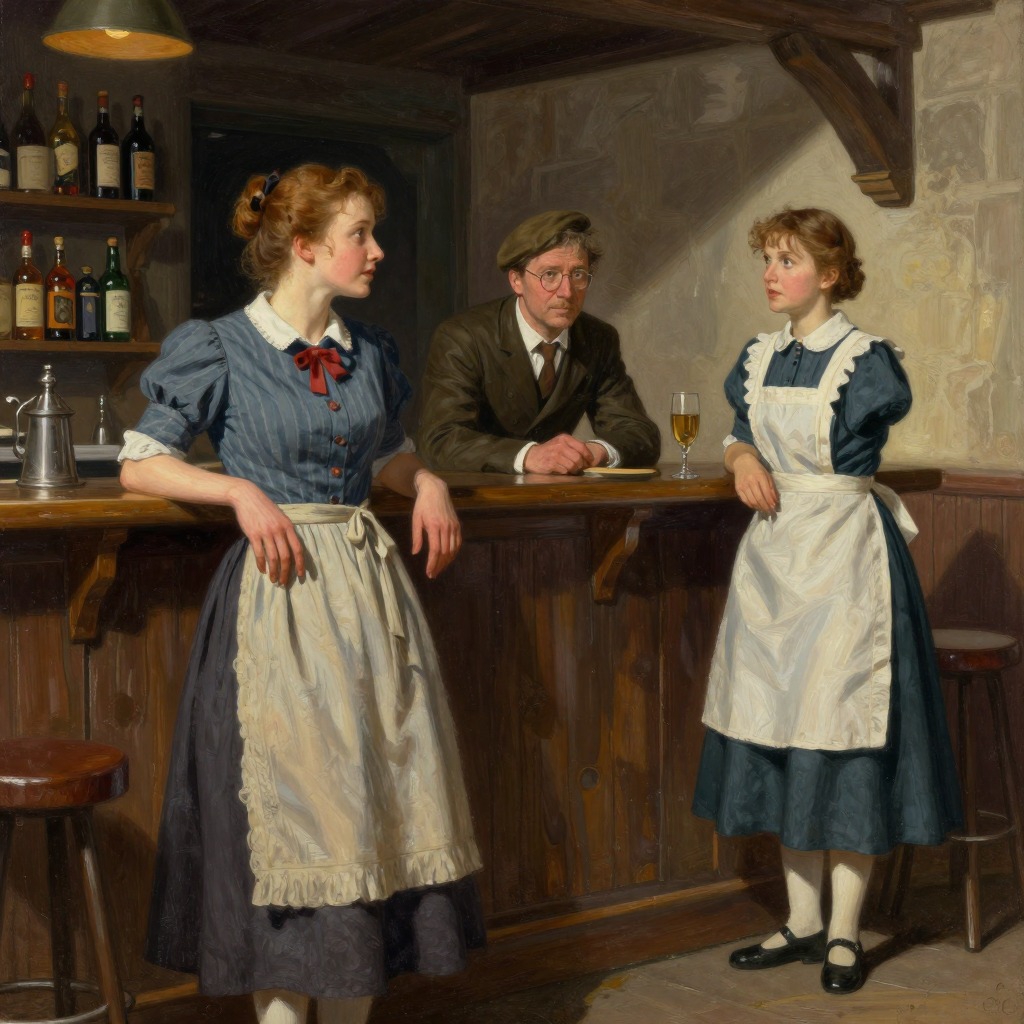
As K.'s assistants, Jeremias and Artur are a constant source of irritation. They are clumsy, childish, and intrusive, and K. complains that they are "as like as two snakes." They are eager to please but inept, and K. is often exasperated by their behavior. When K. tries to dismiss them, they refuse to leave, and they follow him everywhere, even into his intimate moments with Frieda. They are present when K. and Frieda first become lovers under the bar at the Castle Inn, and they later sit on the bar counter watching them, which K. finds deeply unsettling. Their presence is a persistent reminder of the castle's surveillance and control over K.'s life.
Relationship with Frieda and the Break with K.
Jeremias's relationship with Frieda is rooted in their shared childhood, as he reveals when he tells K. that they "played together on the slopes of Castle Mount." This bond makes him a natural confidant for Frieda, and after K. dismisses the assistants, Jeremias becomes the means by which Frieda leaves K. He breaks the school window to help her escape, and they flee to the Castle Inn, where they share a room. Jeremias claims that he is not in love with Frieda, but that he respects her as a former lover of Klamm, and that he is merely helping her because she begged him to free her from K. He also reveals that he and Artur were sent by Galater, who was deputizing for Klamm, with the specific instruction to "cheer him up a little," suggesting that their disruptive behavior was part of a larger design.
Change and Decline
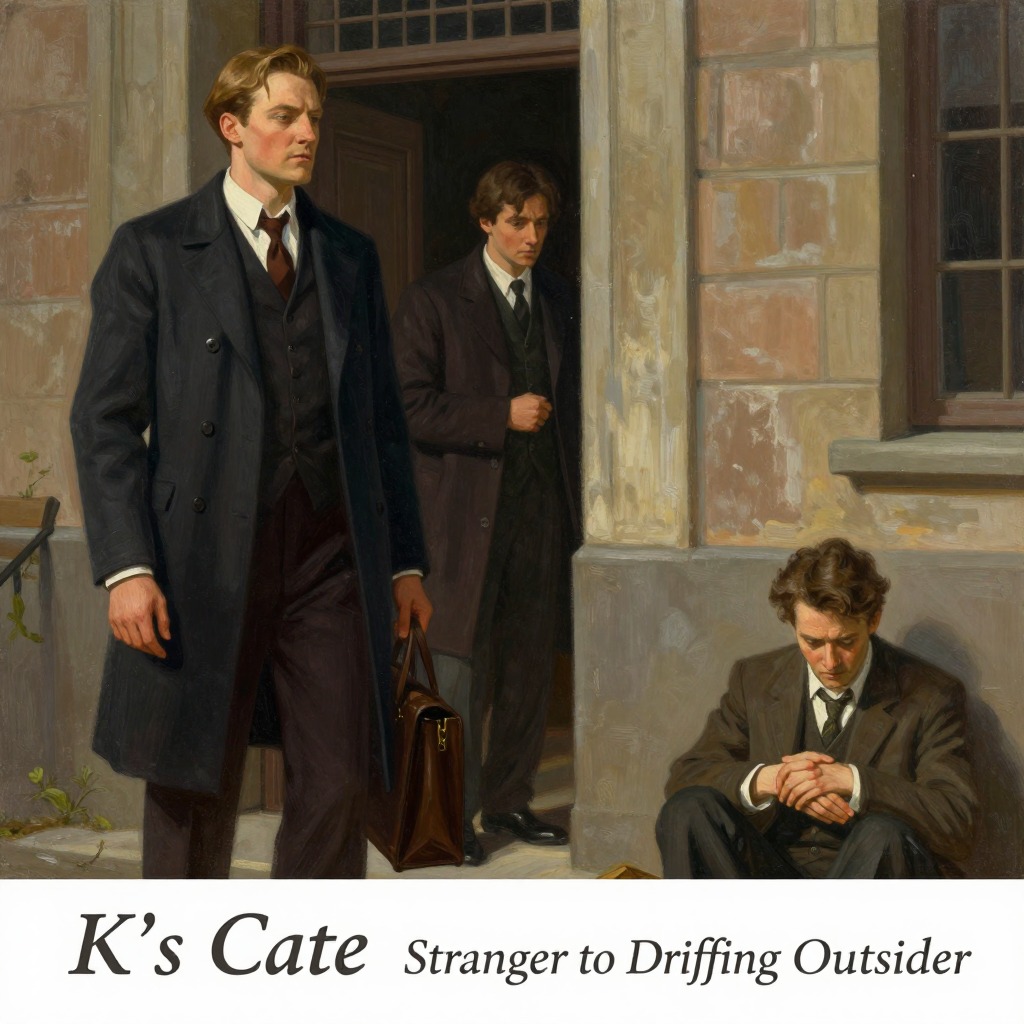
After leaving K.'s service, Jeremias undergoes a noticeable physical and emotional decline. When K. encounters him outside Barnabas's house, he is older, wearier, his face fuller but more lined, and he walks with a limp. He explains that "when I'm on my own my cheerful youthfulness is all gone." He is also suffering from a chill he caught while waiting outside the school, and he appears pitiful and sickly. His decline is a testament to the toll that his service to the castle and his involvement with K. and Frieda have taken on him. Despite his weakened state, he remains defiant, and he and K. engage in a tense confrontation in which Jeremias accuses K. of being a rough master and of not appreciating the sacrifice Frieda made for him.
Thematic Significance
Jeremias embodies the castle's pervasive and often incomprehensible influence over the lives of the villagers and outsiders like K. He is a tool of the authorities, sent to observe and disrupt, and his actions are not entirely his own. His relationship with Frieda, which is both a childhood friendship and a means of separating her from K., highlights the theme of inaccessibility and the difficulty of forming genuine connections in a world governed by opaque bureaucratic forces. Jeremias's decline also underscores the novel's exploration of exhaustion and the corrosive effects of the castle's power on individuals, even those who serve it.